Quizzes

Practice mode or timed exam — test your knowledge

107 Quizzes
Can’t find the quiz you need? Create it yourself — ready in minutes with Quiz Pro.

Showing 24 of 107 quizzes

Graph Databases (Neo4j)
Quiz 1,999 Qs

Graph Databases (Neo4j)

Graph Databases are specialized NoSQL databases designed to store, manage, and analyze highly connected data using nodes, relationships, and properties. Unlike traditional relational databases, graph databases excel at modeling complex relationships and performing fast relationship-based queries. Neo4j is the world's leading graph database platform, widely used for social networks, recommendation engines, fraud detection, knowledge graphs, network analysis, and real-time relationship-driven applications.

GraphQL
Quiz 1,999 Qs

GraphQL

GraphQL is a powerful open-source query language and runtime for APIs developed by GraphQL Official Website. It enables clients to request exactly the data they need, reducing over-fetching and under-fetching of data commonly seen in traditional REST APIs. GraphQL provides a flexible, efficient, and strongly typed approach to API development, making it a popular choice for modern web, mobile, and microservices-based applications.

Green Software Engineering
Quiz 1,976 Qs

Green Software Engineering

Green Software Engineering is the practice of designing, developing, deploying, and operating software systems in an environmentally sustainable manner. It focuses on reducing energy consumption, carbon emissions, hardware waste, and resource utilization while maintaining performance, scalability, and reliability. Green Software Engineering helps organizations build sustainable digital solutions that contribute to environmental responsibility and long-term operational efficiency.

gRPC
Quiz 1,998 Qs

gRPC

gRPC (Google Remote Procedure Call) is a high-performance, open-source framework developed by Google for building fast, scalable, and reliable distributed applications. It enables services to communicate efficiently across networks using Protocol Buffers (Protobuf) for data serialization and HTTP/2 for transport. gRPC is widely used in microservices architectures, cloud-native applications, real-time systems, and high-performance backend services due to its speed, strong typing, and support for multiple programming languages.

Helm
Quiz 2,000 Qs

Helm

Helm is the most popular package manager for Kubernetes, designed to simplify the deployment, configuration, and management of applications in Kubernetes clusters. It uses reusable packages called Helm Charts to define, install, and upgrade complex applications consistently across different environments. Helm helps DevOps engineers and platform teams automate Kubernetes deployments, manage configurations efficiently, and reduce operational complexity.

High-Level Design (HLD)
Quiz 2,000 Qs

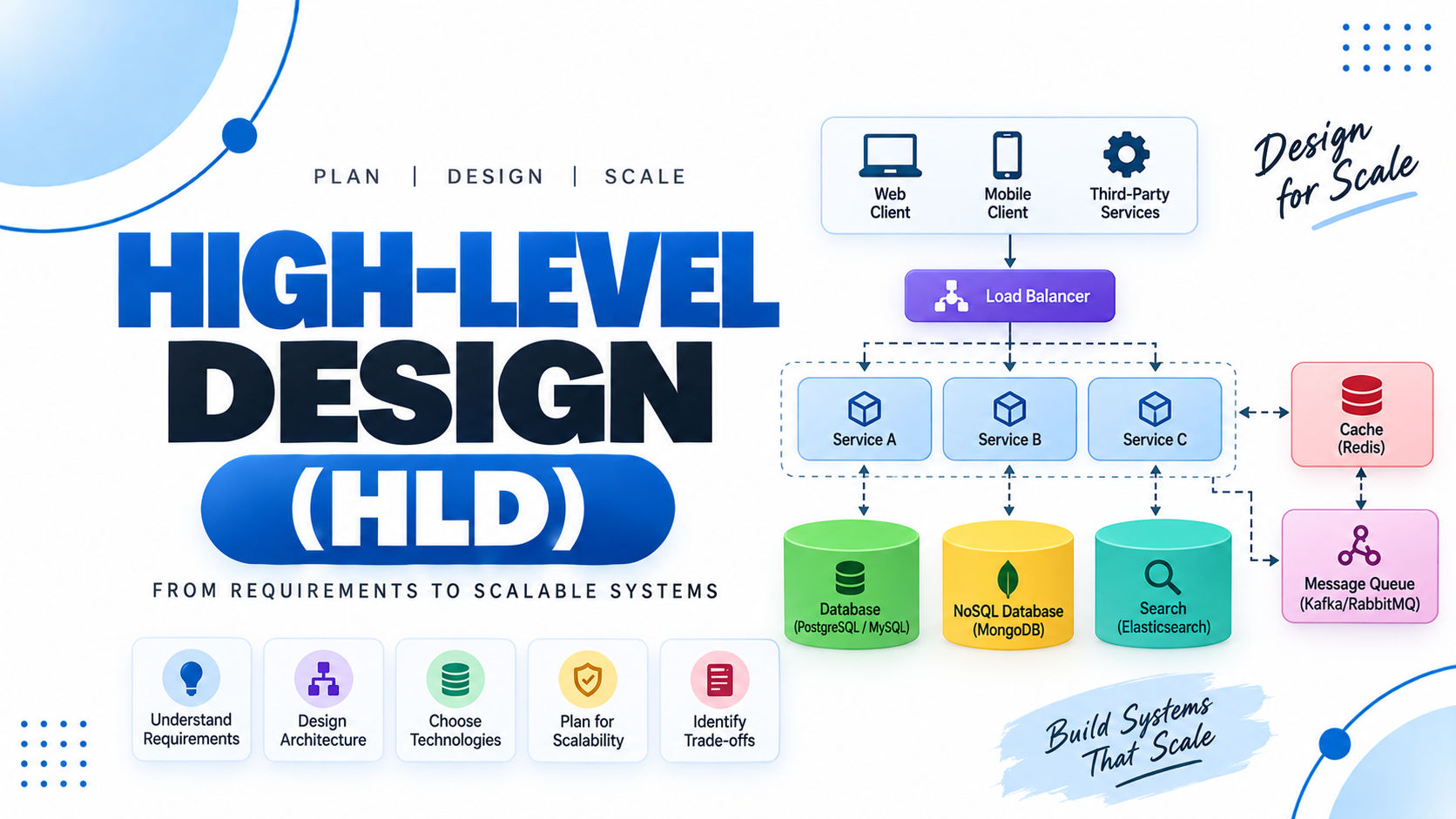
High-Level Design (HLD)

High-Level Design (HLD) is the process of defining the overall architecture and structure of a software system before implementation begins. It focuses on system components, data flow, scalability, technology choices, integrations, security, and infrastructure design. HLD provides a blueprint for building large-scale, reliable, and maintainable applications by addressing business requirements and system-level decisions.

Identity & Access Management (IAM)
Quiz 1,999 Qs

Identity & Access Management (IAM)

Identity & Access Management (IAM) is a security framework that ensures the right individuals and systems have appropriate access to resources at the right time. IAM helps organizations manage user identities, authentication, authorization, and access controls across applications, databases, cloud platforms, and enterprise systems. It is a critical component of cybersecurity, cloud security, and compliance, enabling secure and efficient access management while reducing security risks.

Internet of Things (IoT)
Quiz 1,925 Qs

Internet of Things (IoT)

The Internet of Things (IoT) is a network of interconnected physical devices, sensors, software, and systems that collect, exchange, and analyze data over the internet. IoT enables smart automation, real-time monitoring, and intelligent decision-making across industries such as healthcare, manufacturing, agriculture, transportation, smart homes, and smart cities. By connecting devices and leveraging data analytics, IoT helps improve efficiency, productivity, and user experiences.

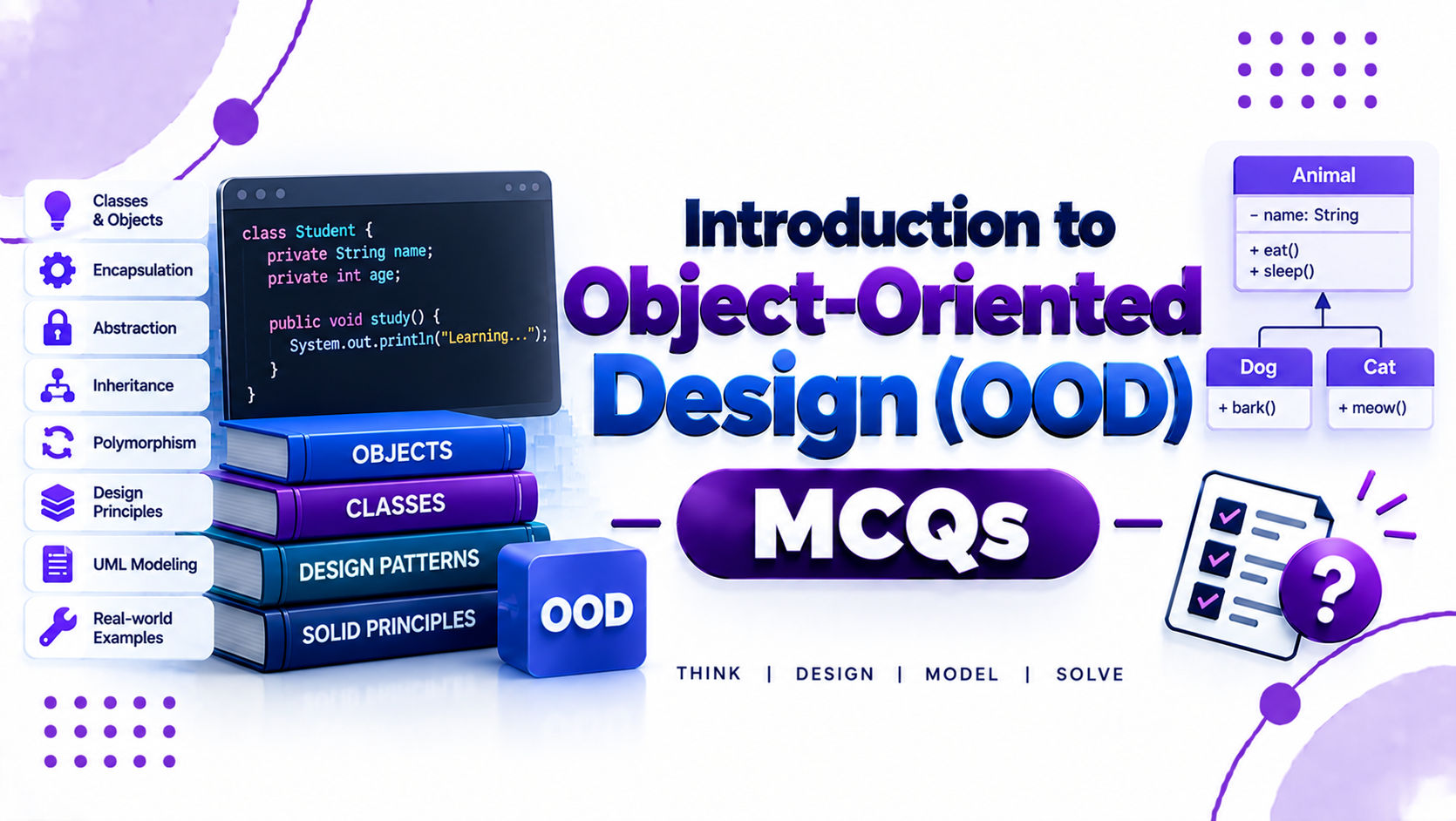
Introduction to Object-Oriented Design (OOD)
Quiz 2,000 Qs

Introduction to Object-Oriented Design (OOD)

Object-Oriented Design (OOD) is a software design methodology that focuses on modeling software systems as a collection of interacting objects. It applies Object-Oriented Programming (OOP) principles to create scalable, maintainable, reusable, and flexible software solutions. OOD helps developers transform requirements into well-structured designs by identifying classes, objects, relationships, and responsibilities before implementation.

Java Collections Deep Dive
Quiz 2,000 Qs

Java Collections Deep Dive

Java Collections Deep Dive is an advanced course focused on mastering the Java Collections Framework (JCF), one of the most critical components of Java development. It provides a detailed understanding of collection interfaces, implementation classes, internal working mechanisms, performance characteristics, concurrency support, and best practices for building efficient and scalable Java applications.

Java Interview Preparation
Quiz 1,990 Qs

Java Interview Preparation

Java Interview Preparation is a comprehensive program designed to help students and professionals master Core Java, Advanced Java, problem-solving, and interview-focused concepts required for software development roles. The course covers frequently asked interview topics, coding challenges, real-world scenarios, and best practices to build confidence for technical interviews at product-based and service-based companies.

Java Multithreading
Quiz 2,000 Qs

Java Multithreading

Java Multithreading is an advanced programming concept that enables multiple threads to execute concurrently within a single application. It helps improve application performance, responsiveness, and resource utilization by allowing tasks to run simultaneously. Multithreading is widely used in enterprise applications, web servers, real-time systems, distributed applications, and high-performance computing environments. Understanding Java concurrency is essential for building scalable and efficient software systems.

Java Streams
Quiz 1,997 Qs

Java Streams

Java Streams is a powerful feature introduced in Java 8 that enables functional-style processing of collections and data sequences. The Stream API allows developers to perform complex data operations such as filtering, mapping, sorting, grouping, and aggregation in a concise, readable, and efficient manner. Streams help simplify code, improve productivity, and support parallel processing for enhanced performance.

Jenkins
Quiz 2,000 Qs

Jenkins

Jenkins is a leading open-source automation server used to implement Continuous Integration (CI) and Continuous Delivery/Deployment (CD) pipelines. It helps development teams automate the building, testing, and deployment of applications, enabling faster software delivery and improved code quality. Jenkins supports hundreds of plugins, making it highly flexible for integrating with source control systems, testing frameworks, cloud platforms, containers, and DevOps tools.

JVM Performance Tuning
Quiz 2,000 Qs

JVM Performance Tuning

JVM (Java Virtual Machine) Performance Tuning is the process of optimizing Java applications by configuring memory management, garbage collection, thread handling, JVM parameters, and runtime behavior to achieve better performance, scalability, stability, and resource utilization. Effective JVM tuning helps reduce latency, improve throughput, prevent memory issues, and ensure Java applications perform efficiently in production environments.

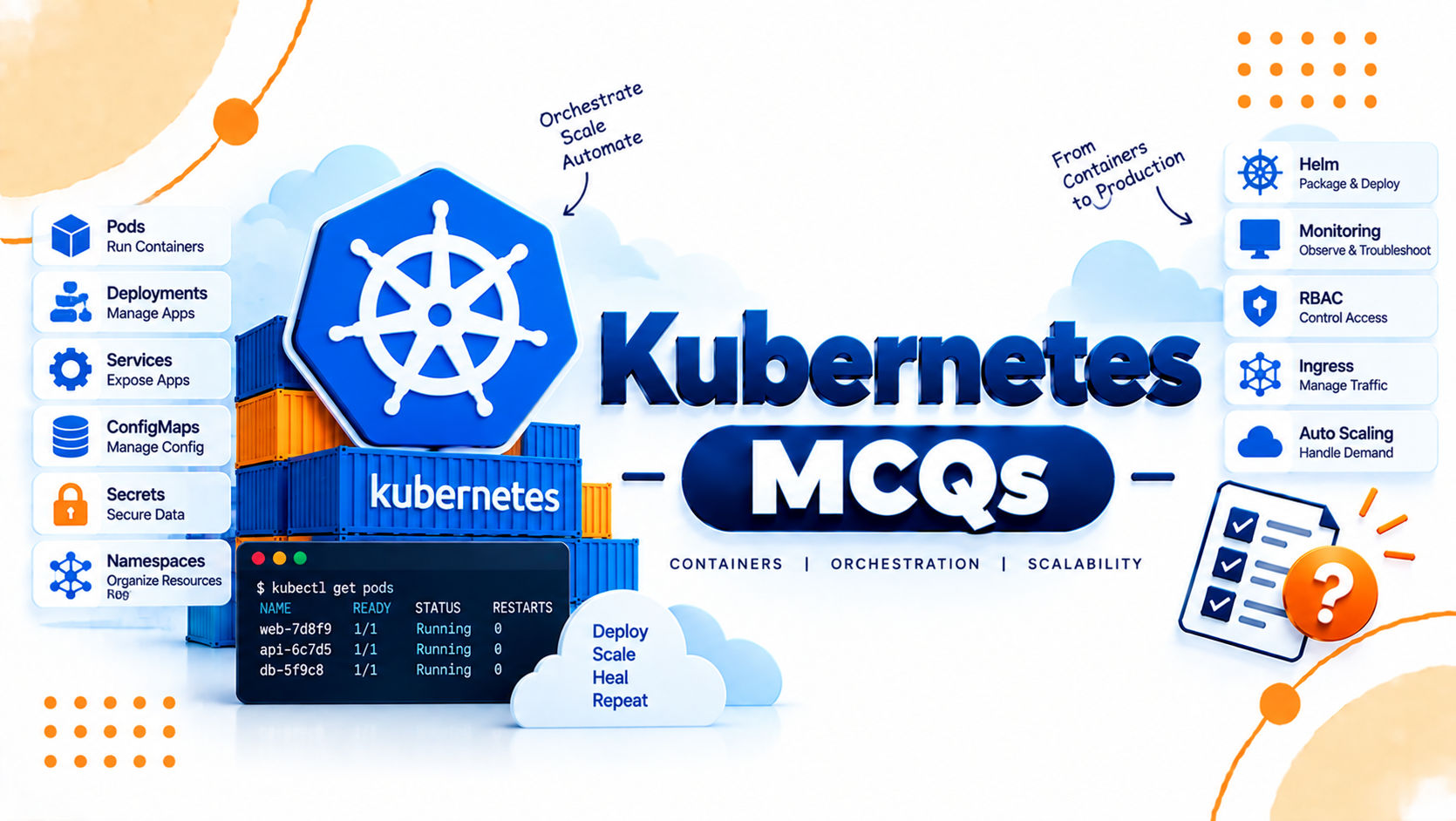
Kubernetes
Quiz 1,996 Qs

Kubernetes

Kubernetes (K8s) is an open-source container orchestration platform that automates the deployment, scaling, management, and monitoring of containerized applications. Originally developed by Google, Kubernetes helps organizations efficiently manage applications across clusters of servers, ensuring high availability, fault tolerance, and scalability. It is a core technology in modern cloud-native, microservices, and DevOps environments.

Linux Administration
Quiz 1,991 Qs

Linux Administration

Linux Administration involves the installation, configuration, management, and maintenance of Linux-based operating systems and servers. Linux is widely used in enterprise environments, cloud computing, DevOps, cybersecurity, and web hosting due to its stability, security, and flexibility. Linux Administrators are responsible for ensuring system performance, security, user management, networking, and reliable operation of Linux infrastructure.

Load Testing (JMeter)
Quiz 3,999 Qs

Load Testing (JMeter)

Load Testing is a performance testing technique used to evaluate how an application, API, database, or system behaves under expected and peak user loads. Apache JMeter is a widely used open-source performance testing tool that helps teams simulate concurrent users, measure response times, identify bottlenecks, and ensure system stability before production deployment. Load Testing is essential for validating scalability, reliability, and user experience in modern applications.

Low-Level Design (LLD)
Quiz 2,050 Qs

Low-Level Design (LLD)

Low-Level Design (LLD) is the process of designing the internal structure of a software system by defining classes, objects, methods, relationships, data models, and implementation details. It translates high-level architectural concepts into detailed, object-oriented designs that developers can directly implement in code. LLD focuses on code maintainability, scalability, reusability, and adherence to software design principles and best practices.

Machine Learning
Quiz 2,100 Qs

Machine Learning

Machine Learning (ML) is a branch of Artificial Intelligence that enables computers to learn from data and make predictions or decisions without being explicitly programmed. By identifying patterns and relationships within data, ML models can automate tasks, improve accuracy, and generate valuable insights across various industries. Machine Learning powers applications such as recommendation systems, fraud detection, predictive analytics, image recognition, speech processing, and intelligent automation.

MLOps
Quiz 1,988 Qs

MLOps

MLOps (Machine Learning Operations) is the practice of applying DevOps principles to the machine learning lifecycle to automate, deploy, monitor, and manage ML models in production. It bridges the gap between data science, machine learning engineering, and operations teams, enabling organizations to build scalable, reliable, and maintainable AI systems. MLOps ensures that machine learning models can be continuously trained, tested, deployed, monitored, and improved efficiently.

Mobile App Development (React Native)
Quiz 2,000 Qs

Mobile App Development (React Native)

React Native is a popular open-source framework developed by Meta for building cross-platform mobile applications using JavaScript and React. It enables developers to create high-performance mobile apps for both Android and iOS from a single codebase, reducing development time and cost. React Native combines the flexibility of web development with native mobile capabilities, making it a preferred choice for modern mobile application development.

MongoDB Advanced
Quiz 1,998 Qs

MongoDB Advanced

MongoDB Advanced focuses on enterprise-level database design, performance optimization, scalability, security, and high-availability features of MongoDB. It covers advanced concepts required to build and manage large-scale, high-performance applications using MongoDB’s document-oriented NoSQL architecture. These skills help developers and database administrators efficiently handle complex data workloads, distributed systems, and real-time applications.

Network Security
Quiz 1,981 Qs

Network Security

Network Security is the practice of protecting computer networks, devices, and data from unauthorized access, cyberattacks, and security breaches. It involves implementing technologies, policies, and procedures to ensure the confidentiality, integrity, and availability of network resources. Network Security plays a critical role in safeguarding organizational infrastructure, preventing data loss, and maintaining secure communication across wired and wireless networks.

Open WhatsApp chat